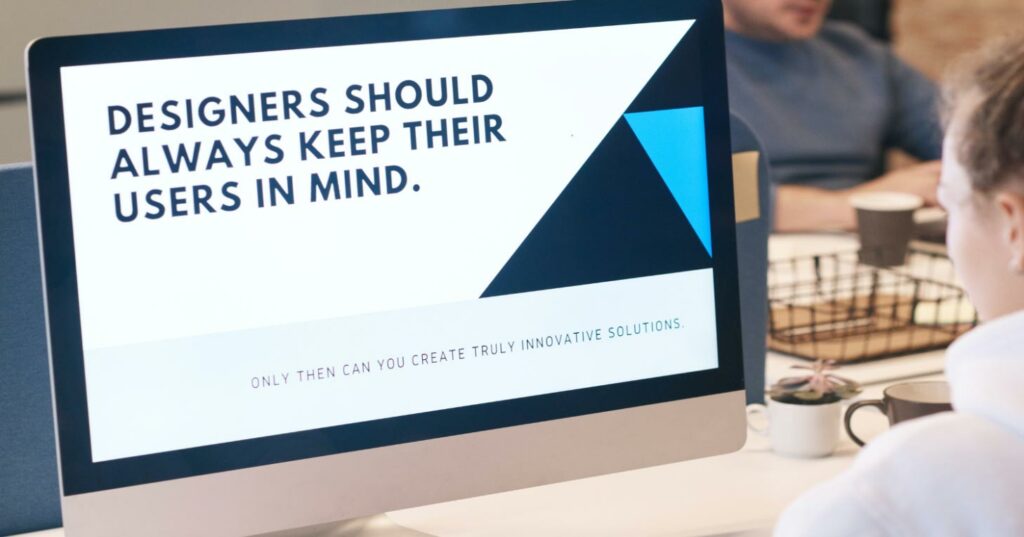


Good Design is Accessible Design: Why Inclusivity is Non-Negotiable
In the field of Experience Design, we spend a lot of time talking about creating intuitive and engaging products. But there’s a fundamental question we must ask ourselves first: who are we designing for? If the answer isn’t “everyone,” then we have failed before we’ve even begun.
Accessibility is not an edge case. It’s not a checkbox to be ticked at the end of a project. It is the ethical and commercial foundation of good design. It’s the practice of creating digital experiences that can be used by everyone, regardless of their physical or cognitive abilities.
At BlueSky, we don’t see accessibility as a limitation on design, but as a catalyst for innovation.
The Myth of the "Average" User
For too long, design has been geared towards a mythical “average” user. But there is no average user. We all experience the world differently. Some people have permanent disabilities (like blindness), some have temporary impairments (like a broken arm), and some have situational limitations (like trying to use a phone in bright sunlight).
Inclusive design, which is the mindset behind accessibility, is about designing for this human reality. It’s about understanding that a solution that works for someone with a permanent disability will almost certainly create a better, more robust experience for everyone.
Think about it:
- High-contrast text, designed for users with low vision, is also easier for everyone to read on their mobile in the glare of the sun.
- Clear, simple language, essential for users with cognitive disabilities, reduces confusion and builds trust with your entire audience.
- Video captions, created for the deaf and hard of hearing, are used every day by people watching videos in a noisy office or on public transport.
Beyond Compliance: The Business Case for Accessibility
While there are legal and ethical imperatives for accessibility (like the WCAG guidelines), the business case is just as powerful. An accessible website expands your potential market to include millions of people with disabilities. It improves your SEO, as search engines favour well-structured, accessible content. And most importantly, it sends a powerful message that your brand is inclusive and cares about all its customers.
The BlueSky Takeaway:
Stop treating accessibility as a barrier and start seeing it as a design principle. By embracing inclusivity from day one, you will not only do the right thing, but you will also create better, more innovative, and more successful products for every single one of your users.
Frequently Asked Questions (FAQ)
- What is WCAG?
WCAG stands for the Web Content Accessibility Guidelines. It is an internationally recognised set of technical standards for web accessibility. The guidelines are organised under four main principles: content must be Perceivable, Operable, Understandable, and Robust (POUR). Following these guidelines is the best way to ensure your digital product is accessible. - Is accessible design boring?Absolutely not. This is a common misconception. Accessibility does not stifle creativity; it challenges designers to be more creative. The constraints of accessibility often lead to cleaner, more innovative, and more user-friendly solutions that are both beautiful and functional for all.
- Where is the best place to start with making our website accessible?
A great place to start is with an accessibility audit. This can be done using automated tools to catch common issues and, more importantly, through manual testing with users who have disabilities. This audit will provide a clear, prioritised list of issues to address. The key is to start somewhere and make continuous improvement a core part of your design and development process.